When people picture a successful food trailer business, they usually think about the menu, branding, or the crowds gathered outside the serving window. What often gets overlooked is what happens inside the trailer. The quality and layout of your food trailer equipment can directly influence service speed, food consistency, workflow efficiency, and ultimately customer satisfaction. While branding may attract attention, equipment performance is often what keeps a business running smoothly day after day.
As New Zealand’s mobile hospitality sector continues to grow, operators are paying much closer attention to the systems that power their businesses behind the scenes.
Quick Answer
The right food trailer equipment helps businesses:
Serve customers faster
Improve food consistency
Maximize limited space
Reduce operational downtime
Enhance staff productivity
Support long-term business growth
Well-planned equipment isn’t just a cost—it’s an investment in operational efficiency.
Why Equipment Decisions Matter More Than Most Startups Realize
Many first-time operators focus heavily on appearance.
That’s understandable.
Customers see the trailer exterior before they experience anything else.
However, experienced operators understand that operational performance usually determines whether a business thrives or struggles over time.
Inside a mobile kitchen, every movement matters.
Poor equipment placement can lead to:
Slower preparation times
Staff congestion
Reduced productivity
Service delays
Increased operational stress
Small inefficiencies quickly become noticeable during busy trading periods.
Mobile Kitchens Require Smarter Space Management
Unlike traditional restaurants, food trailers operate within a compact environment.
Every square metre needs to perform a purpose.
This makes equipment selection especially important.
Effective trailer designs prioritize:
Multi-Functionality
Equipment that performs multiple tasks helps maximize available space.
Accessibility
Staff should be able to access tools and ingredients without unnecessary movement.
Workflow Efficiency
Preparation, cooking, serving, and cleaning should follow a logical sequence.
Storage Optimization
Efficient storage reduces clutter and improves productivity.
The goal is creating an environment where operations feel smooth rather than crowded.
Why Faster Service Creates Better Customer Experiences
Customer expectations have changed.
Whether someone visits a food trailer at a market, festival, or event, they expect:
Quick ordering
Consistent quality
Minimal waiting
Reliable service
Efficient equipment supports all of these expectations.
For example:
Faster refrigeration access improves preparation speed.
Well-positioned cooking stations reduce unnecessary movement.
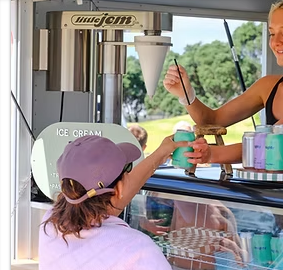
Efficient serving layouts help manage customer queues.
Customers may never notice the equipment directly, but they notice the results.
Reliability Becomes More Important as Businesses Growth
One of the biggest challenges in hospitality is consistency.
A single equipment failure can affect:
Service quality
Revenue
Customer satisfaction
Event performance
That’s why many operators prioritize commercial-grade equipment designed for demanding hospitality environments.
Reliable systems often provide:
Longer operational lifespan
Reduced maintenance interruptions
Better performance consistency
Greater confidence during busy periods
In hospitality, reliability often becomes a competitive advantage.
Energy Efficiency Is Becoming a Priority
Modern mobile businesses increasingly focus on operational sustainability.
Energy-efficient equipment can help reduce:
Fuel consumption
Generator strain
Utility expenses
Long-term operating costs
This is particularly valuable for businesses operating:
At remote events
In outdoor environments
During extended trading hours
Small improvements in efficiency often produce meaningful long-term savings.
The Link Between Equipment and Food Quality
Customers return because they trust the experience.
That trust depends heavily on consistency.
Proper equipment helps maintain:
Accurate temperatures
Consistent cooking results
Product quality standards
Food safety compliance
When systems perform consistently, businesses can focus more on customer experience and less on operational challenges.
That’s particularly important during busy service periods where pressure naturally increases.
Future-Proofing Your Mobile Hospitality Business
Many businesses start small and expand gradually.
The right equipment setup should support that growth.
Questions worth considering include:
Can the system handle increased demand?
Is the layout adaptable?
Will future menu changes require upgrades?
Can workflow scale efficiently?
Planning ahead often prevents costly modifications later.
Growth becomes much easier when the original setup supports expansion.
Internal Resources Worth Exploring
Businesses researching equipment solutions often benefit from exploring mobile kitchen layouts, trailer configurations, and coffee or dessert-focused setups. Understanding how different hospitality concepts use space can provide valuable insight before making equipment decisions.
The more informed the planning process, the stronger the final outcome.
Frequently Asked Questions
What is the most important food trailer equipment?
The answer depends on the business model, but refrigeration, cooking equipment, ventilation systems, storage solutions, and serving stations are often essential.
Does equipment placement affect service speed?
Yes. Efficient layouts reduce unnecessary movement and improve workflow throughout the day.
Why is commercial-grade equipment recommended?
Commercial equipment is designed to handle higher usage levels and typically offers greater durability and reliability.
Can better equipment improve profitability?
Indirectly, yes. Faster service, fewer breakdowns, and greater efficiency can positively impact overall business performance.
How often should food trailer equipment be maintained?
Routine inspections and preventative maintenance help maximize lifespan and reduce unexpected operational disruptions.
Strong Hospitality Businesses Are Built Behind the Counter
Customers often remember great food, friendly service, and memorable experiences. What they rarely see is the equipment and workflow that make those experiences possible. As mobile hospitality continues growing across New Zealand, businesses that invest in practical, reliable, and efficient operational systems often place themselves in a stronger position for long-term success.
NZ Food Trailers helps entrepreneurs create mobile hospitality environments designed around functionality, efficiency, and sustainable business growth—giving operators the tools they need to serve customers confidently and consistently.
 :
https://in.pinterest.com/nzfoodtrailers/
:
https://in.pinterest.com/nzfoodtrailers/